
UK Income Tax Rates 2025/2026 & 2026/2027: Brackets, Personal Allowance & Take-Home Salary Guide
Understanding how your hard-earned salary is taxed in the United Kingdom is fundamental to financial planning. Whether you are negotiating a new salary, calculating monthly budgeting, or optimizing workplace pension contributions, understanding HMRC Income Tax bands, National Insurance thresholds, and the Personal Allowance taper helps you maximize your net take-home pay.
1. UK Income Tax Rates & Bands 2025/2026
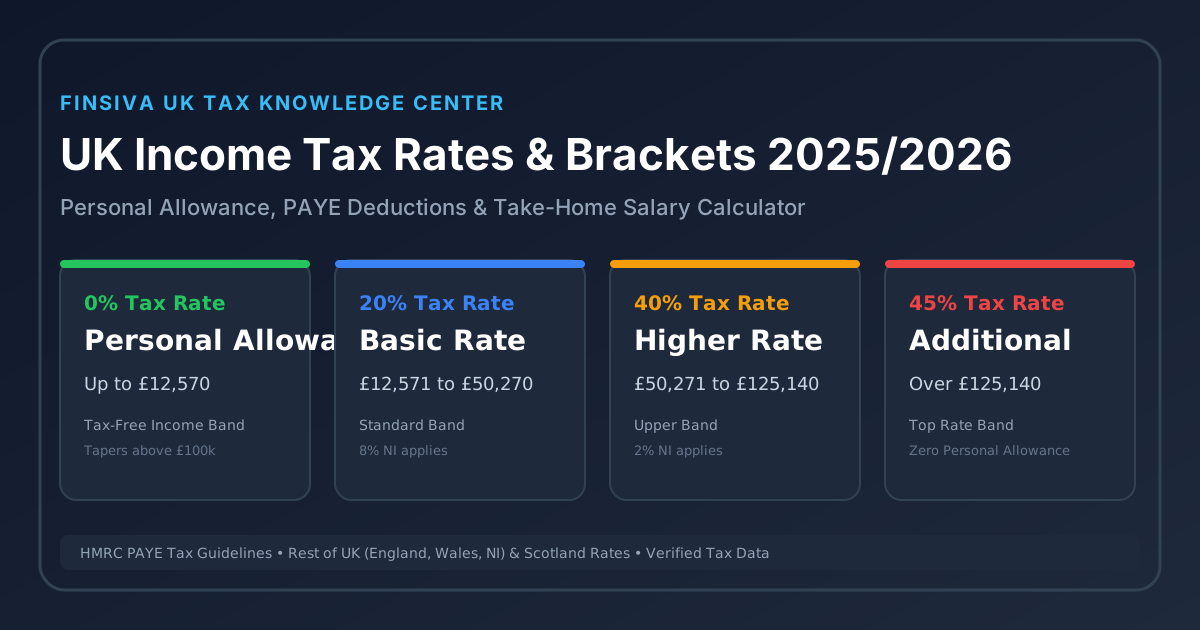
The UK tax system is progressive, meaning higher portions of your income are taxed at higher marginal rates. For taxpayers residing in England, Wales, and Northern Ireland, HMRC applies the following Income Tax bands:
| Tax Band | Taxable Income Threshold | Tax Rate |
|---|---|---|
| Personal Allowance | Up to £12,570 | 0% |
| Basic Rate | £12,571 to £50,270 | 20% |
| Higher Rate | £50,271 to £125,140 | 40% |
| Additional Rate | Above £125,140 | 45% |
You can test different salary figures using our free UK Income Tax Calculator.
2. Personal Allowance & The £100,000 Tax Trap
Standard UK taxpayers receive an annual tax-free Personal Allowance of £12,570. However, high earners face a significant cliff edge known as the £100,000 Personal Allowance Taper.
Warning: The 60% Marginal Tax Rate
For every £2 of adjusted net income you earn over £100,000, your Personal Allowance drops by £1. Between £100,000 and £125,140, this loss of tax-free allowance coupled with 40% Higher Rate tax results in an effective 60% marginal tax rate (62% including 2% National Insurance).
3. Class 1 National Insurance Contributions
Employees also pay Class 1 National Insurance (NI) through the PAYE system.
- Main Rate (8%): Deducted on earnings between £12,570 and £50,270 per year (£242 to £967 per week).
- Upper Rate (2%): Deducted on earnings above £50,270 per year.
4. Gross to Net Salary Comparison Table (£30k to £120k)
The table below provides a detailed breakdown of Income Tax, Class 1 National Insurance, and annual net take-home salary for common UK benchmark incomes:
| Gross Salary | Income Tax | Class 1 NI | Annual Take-Home | Monthly Take-Home |
|---|---|---|---|---|
| £30,000 | £3,486 | £1,394 | £25,120 | £2,093 |
| £40,000 | £5,486 | £2,194 | £32,320 | £2,693 |
| £50,000 | £7,486 | £2,994 | £39,520 | £3,293 |
| £60,000 | £11,432 | £3,211 | £45,357 | £3,780 |
| £70,000 | £15,432 | £3,411 | £51,157 | £4,263 |
| £100,000 | £27,432 | £4,011 | £68,557 | £5,713 |
| £120,000 | £44,432 | £4,411 | £71,157 | £5,930 |
5. Proven Strategies to Reduce Your Taxable Income
- Salary Sacrifice Pension Contributions: Contributing pre-tax salary to an occupational pension scheme lowers your gross income below the £100,000 threshold, reclaiming your Personal Allowance.
- Marriage Allowance: Lower-earning spouses can transfer £1,260 of unused allowance to save up to £252/yr.
- Work-Related Expenses: Claim professional subscriptions (e.g., ACA, ACCA, BMA), uniform washing, and home working allowances from HMRC.