
Scotland vs England Income Tax Rates 2025/2026: Tax Bands, Take-Home Pay & Regional Differences
Under the Scotland Acts of 2012 and 2016, the Scottish Parliament holds devolved powers to set Income Tax rates and band thresholds on non-savings and non-dividend income for individuals living in Scotland. As a result, taxpayers in Scotland experience a distinctly different tax structure compared to taxpayers in England, Wales, and Northern Ireland (rUK).
1. Scottish 6-Band System vs Rest of UK 3-Band System
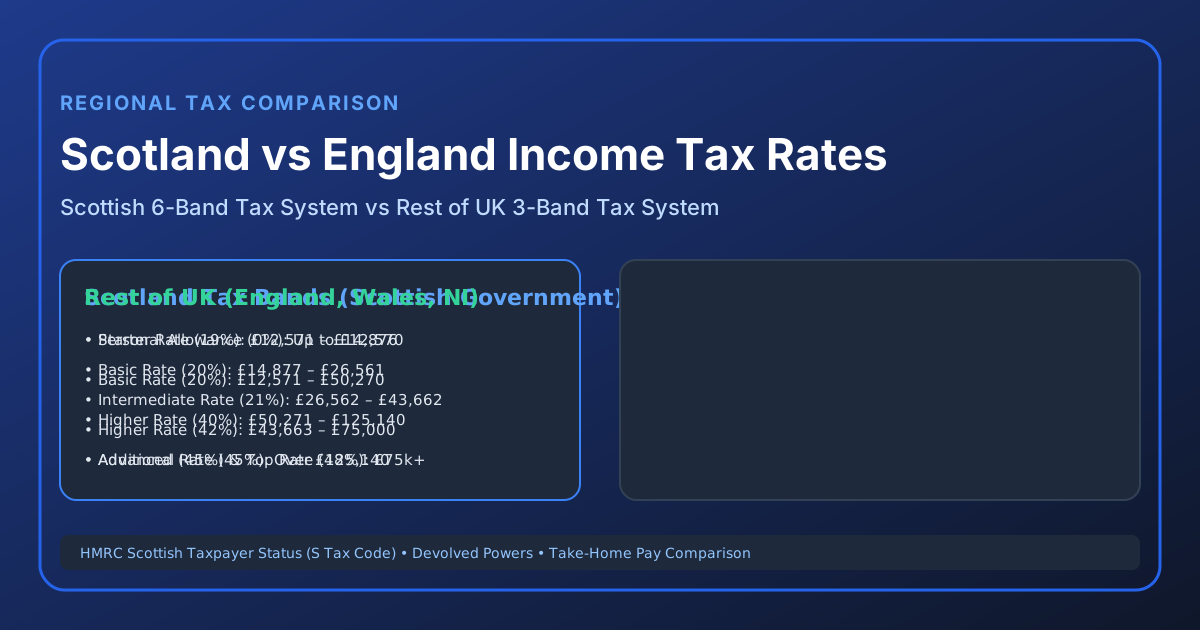
While England, Wales, and Northern Ireland utilize a 3-band structure (20%, 40%, 45%), Scotland operates a progressive 6-band system:
Scottish Income Tax Bands (2025/26)
- Personal Allowance (0%): Up to £12,570
- Starter Rate (19%): £12,571 to £14,876
- Basic Rate (20%): £14,877 to £26,561
- Intermediate Rate (21%): £26,562 to £43,662
- Higher Rate (42%): £43,663 to £75,000
- Advanced Rate (45%): £75,001 to £125,140
- Top Rate (48%): Above £125,140
Rest of UK Tax Bands (England, Wales, NI)
- Personal Allowance (0%): Up to £12,570
- Basic Rate (20%): £12,571 to £50,270
- Higher Rate (40%): £50,271 to £125,140
- Additional Rate (45%): Above £125,140
2. Salary Comparison Table: Take-Home Pay Differences
Lower earners in Scotland pay slightly less tax than in England, while earnings above £28,850 face higher tax rates:
| Gross Salary | England Net Salary | Scotland Net Salary | Annual Difference |
|---|---|---|---|
| £25,000 | £21,120 | £21,143 | +£23 (Scot pays less) |
| £50,000 | £39,520 | £37,978 | -£1,542 (Scot pays more) |
| £75,000 | £54,057 | £51,478 | -£2,579 (Scot pays more) |
| £100,000 | £68,557 | £63,978 | -£4,579 (Scot pays more) |
Calculate your exact Scottish vs Rest of UK take-home salary using our UK Income Tax Calculator.
3. How HMRC Determines Scottish Taxpayer Status (S Tax Codes)
HMRC determines Scottish taxpayer status using main residence rules. If you live in Scotland for the majority of the tax year, your tax code is prefixed with an S (e.g. S1257L).
4. Reserved UK Taxes: NI, CGT & Dividends
The Scottish Parliament only controls tax rates on non-savings employment and self-employment income. The following remain uniform across the entire UK:
- Class 1, 2, and 4 National Insurance contributions.
- Capital Gains Tax rates and £3,000 exemption.
- Dividend Tax rates (8.75%, 33.75%, 39.35%).
- Savings Interest Personal Savings Allowance.